

The best ideas come from the arena
Start. See. Switch things up.
The company behind the Centurion Club and the Black Card, best known for a concierge service and charge cards without limits, and for turning the card in your wallet into a lifestyle choice, that company started out without a product or almost any capital to speak of.
It started, instead, with an idea.
It was the 1840’s, the railroad was shrinking the travel time between cities from days to hours, and suddenly it was possible to send stuff from one place to another, fast. That is, if you had time to take the train yourself and hand-deliver the parcel, or enough trust to hand it to a stranger on the platform heading to the same destination.
Therein was an idea: A fast shipping service to carry parcels between cities on behalf of others. An express service, with little startup costs beyond one man’s time to ride the train with a bundle of packages. Someone had the idea, others copied it, and like any emerging industry with no barriers to entry, suddenly expressmen were everywhere. Three of them banded together in 1850 (among them, one guy named Wells, another Fargo—a story for another day), called their partnership American Express, and for a while the quickest way to send something along the eastern seaboard was with what we’d come to shorten as AMEX.
People shipped everything, back then: Documents, letters, parcels—and gold, coins, and cash. In the days before PayPal and Venmo and bank transfers, the best way to send money between cities was putting it in an envelope and trusting the American Express man to deliver it safely.
There was another idea: Sending money securely without shipping actual cash. The postal service was selling money orders, checks redeemable for cash by recipients. American Express entered the fray, competing by lowering the price, simplifying the form, and adding security features to broaden money orders’ audience and not lose their shirt in the process.
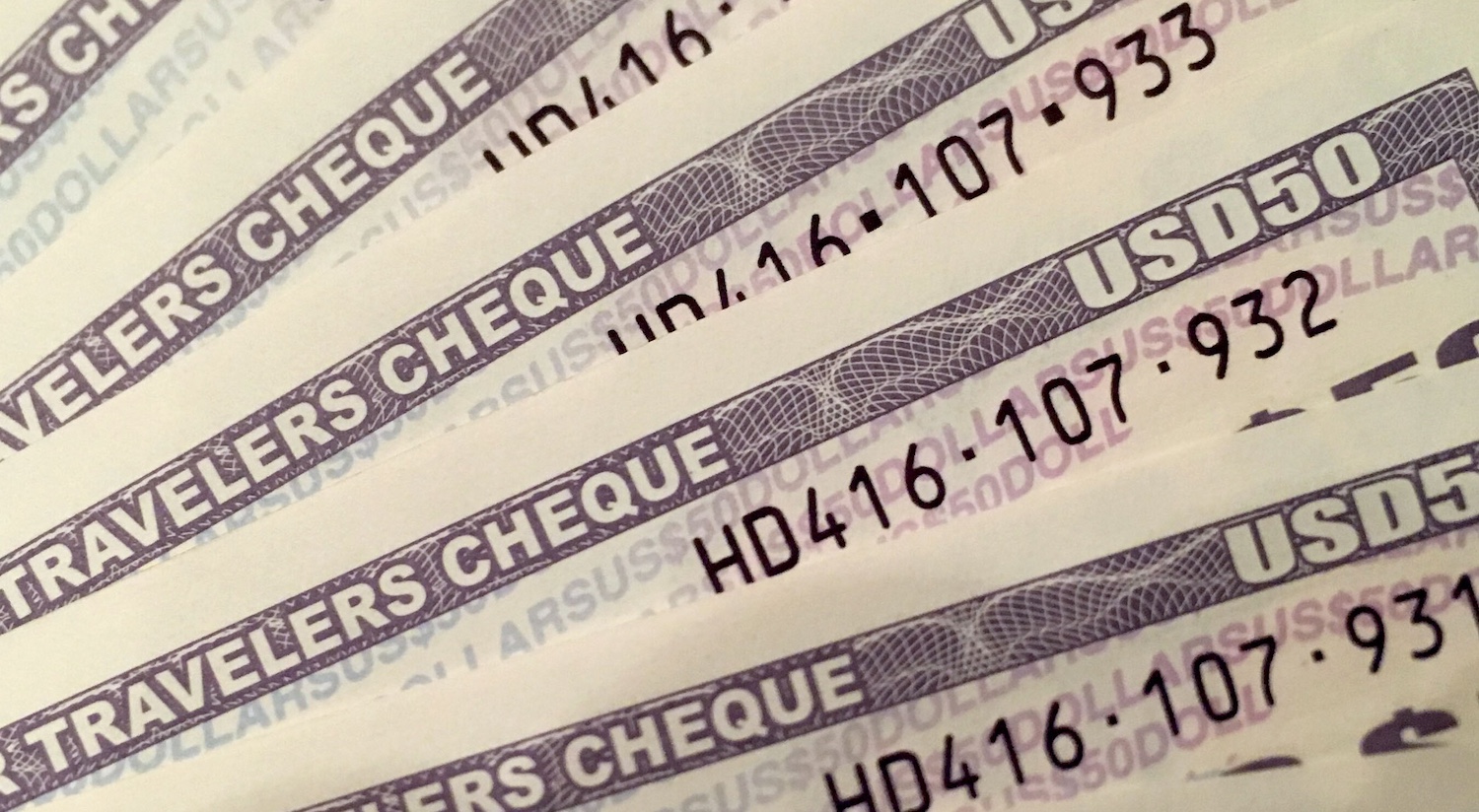
People sent money orders everywhere, started using them in lieu of cash and sending them overseas. It wasn’t a huge leap to start selling traveler’s cheques—British spelling and all—with a few American Express tweaks like a fixed exchange rate (implausible today, possible then) and a guarantee that lost checks could be recovered.
Traveler’s cheques were a hit, enough that a newspaper later remarked that the American Express office was “the first stopping place for every American upon his arrival in Paris.” The demand was enough to prompt expansion, adding enough space for tourists to hang out, orient themselves in a new city, book travel with American Express agents, cash their checks, and perhaps ship some packages home.
And from there it’s not hard to squint and see how a firm founded to ferry parcels on trains would one day be best known for airport lounges as a perk for using their financial instruments—checks then, cards today, moving money for people all the same.
What’s impossible to imagine is three guys, in 1850, dreaming up a credit card and airport lounge empire, fifty-three years before the first powered human flight and a century before the first credit card. Reading through American Express’ unofficial history, it struck me that every new service they offered came only through launching the previous product, seeing how customers used it, and letting curiosity and customer behavior drive the company’s next ventures.
The only way to find out what you’re going to be is to start, then see what’s possible along the way.
Image Credits: Traveler's Cheques photo via Wikipedia